4 min read
Pre-order vs ready to ship: sell both in one shop
Ready pieces and made-to-order pieces make different promises. How one catalog can sell both honestly — availability labels, pre-order notes, stock.
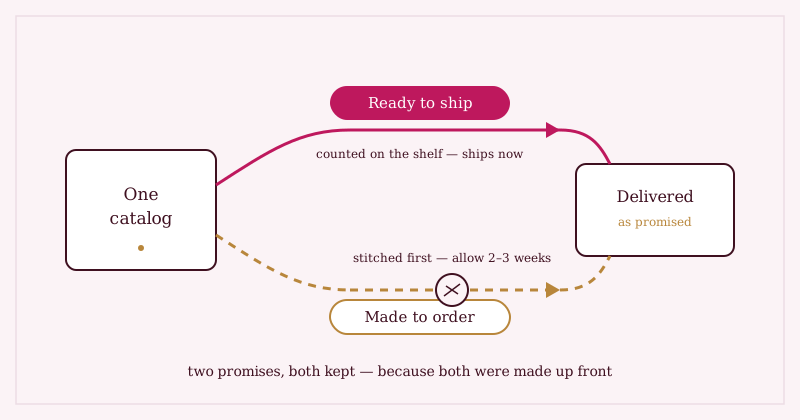
Picture two orders landing on the same evening. The first is a cotton kurti you have folded on the shelf — it could courier tomorrow. The second is a bridal blouse that doesn't exist yet: fabric to source, tailor to book, three fittings ahead. Two completely different promises. And on your catalog, both pieces looked identical — same layout, same button, no hint that one ships in a day and the other in three weeks.
The kurti customer is delighted. The blouse customer messages on day four asking for a tracking number, and now you're explaining production timelines to someone who thought she'd bought off a shelf. Nobody lied — but the catalog let her assume.
One catalog, two businesses
Most boutiques genuinely run both models at once. Ready-to-ship pieces bring quick money and impulse buys; made-to-order is where the margin and the craft live. The mistake isn't mixing them — it's hiding the mix. When every product looks equally "in stock", the catalog is writing cheques your tailor has to cash.
The fix is one label per product, set when you list it: ready to ship or made to order. Not a paragraph — a label the customer sees before she falls in love with the piece.
Say the wait before the order, not after
For pre-order pieces, the label alone isn't enough — "made to order" could mean five days or five weeks. Add one honest line right on the product page: "Stitched to order — allow 2–3 weeks plus delivery." That sentence does three jobs at once. It filters out buyers who need something by Saturday (before they become cancellations). It makes the wait feel like craftsmanship rather than delay. And it timestamps the promise, so the "where is my order?" message never needs to be sent.
This matters double in the festive quarter. A pre-order note that says three weeks in September is quietly also saying "order now for Diwali" — the same sentence that manages expectations off-season becomes urgency when the calendar tightens. Honest lead times are a sales tool, not just damage control.
A three-week wait announced on the product page is craftsmanship. The same wait revealed after payment is a complaint. The information is identical — only the timing changes what it means.
Count stock only where counting means something
Mixing the two models also breaks naive inventory thinking. Your ready-to-ship kurtis have real stock — three on the shelf is three, and when they're gone the listing should say so. But a made-to-order lehenga has no meaningful stock number; you can make another. Forcing a quantity onto it ("stock: 99"?) is fiction, and fiction in your numbers spreads.
So track stock per piece, only where it's real: counts on ready inventory, no count at all on made-to-order. If you're still keeping those counts in a notebook, start with moving boutique inventory from the notebook to a dashboard — the two-lane catalog builds on that foundation.
Where Studio OS fits
Studio OS models this exactly, per product:
- Every product carries an availability setting — ready to ship or pre-order — shown to customers on the shop page, so the promise is visible before the order request.
- Pre-order pieces get a pre-order note ("allow 2–3 weeks…") displayed right on the product page, where it prevents the mismatch instead of apologising for it.
- Stock is optional per product: set a count on ready pieces and it decrements automatically when an order is completed; leave it off for made-to-order pieces, where a number would be make-believe.
- Both kinds sit in one catalog, one orders list, one pipeline — you run one shop, not two.
We're thinking about per-piece lead times as the next refinement, so "2–3 weeks" can live on the product rather than in a note. But honest labels and an upfront wait already dissolve most of the tension between your shelf and your tailor.
See both availability states live in the demo shop, or set up your own two-lane catalog on Studio OS — guest account, no signup needed.